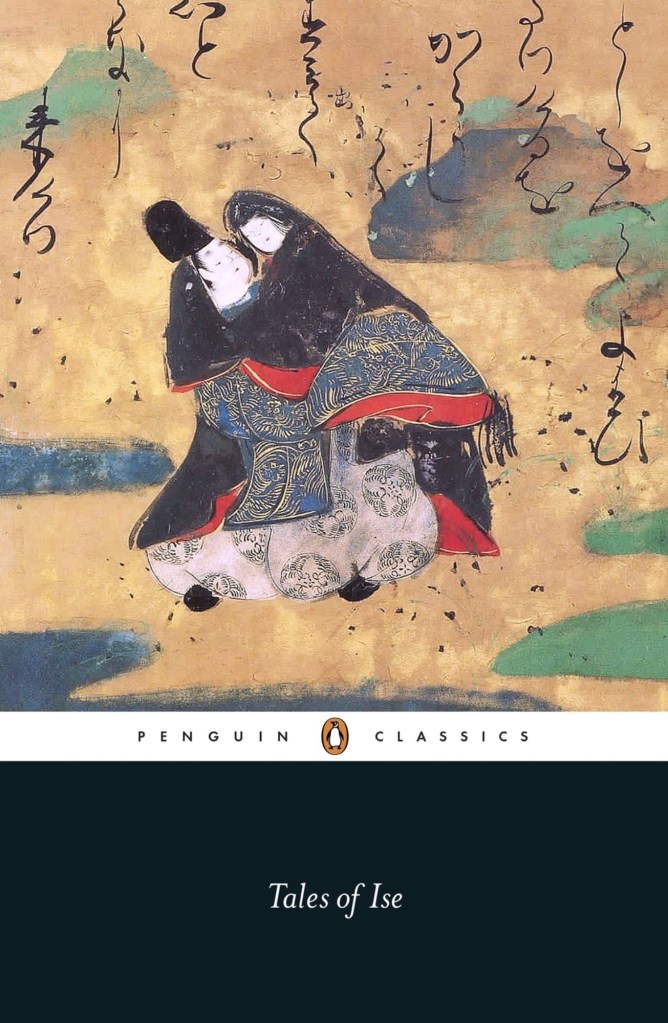
the tales of ise
*******
The title itself is a mystery. Only two or three of the episodes have any connection with Ise, the site of the great shrine of the Shinto religion, but these few episodes are so striking that they may have caused some editor to name the entire collection of stories after Ise.
[…]
to set the events of the episode in the past, a time that was deemed to be far more elegant than the present.
[…]
an evocation of an era when beauty and the quest for beauty were the most important elements of life. The poetry in each episode makes it possible for us to believe that such people really inhabited this refined court.
[…]
Some poems have inspired whole Noh plays and become familiar to every educated Japanese. The work has not been widely read outside Japan because of the lack of translations that are close to the qualities of the original.
[…]
It is the most poetic translation of this work to date, and adds to the treasures of Japanese literature that can now be enjoyed in English translation.
(Donald Keene Professor Emeritus, Columbia University March 2016, Tokyo)
*******
am chibzuit ceva asupra ce sa aleg drept volumul nr 100 al anului. dupa lungi deliberari si comparatii intre “makioka sisters”, “I am a cat” si “tales of ise”, am ales ise – daca tot ezitam intre clasici, de ce sa nu aleg una dintre scrierile de Inceputuri.
prefata scrisa de Donald Keene ma incanta, entuziasmeaza, copleseste, prevad o delectare – poate nemaiintalnita, si abia o astept!…